 Understanding Odor in Offset Printing: Beyond the Ink
Jul 17, 2026
Odor in printed materials is a common concern for clients, often leading to questions about the quality and safety of the product. While printing inks are a primary suspect, the reality is that the scent of a printed piece is a complex interplay of various components used in the offset printing process. Understanding these sources can help both printers and clients manage expectations and address concerns effectively.
1.The Scent of Ink: Mineral Oil vs. Vegetable Oil
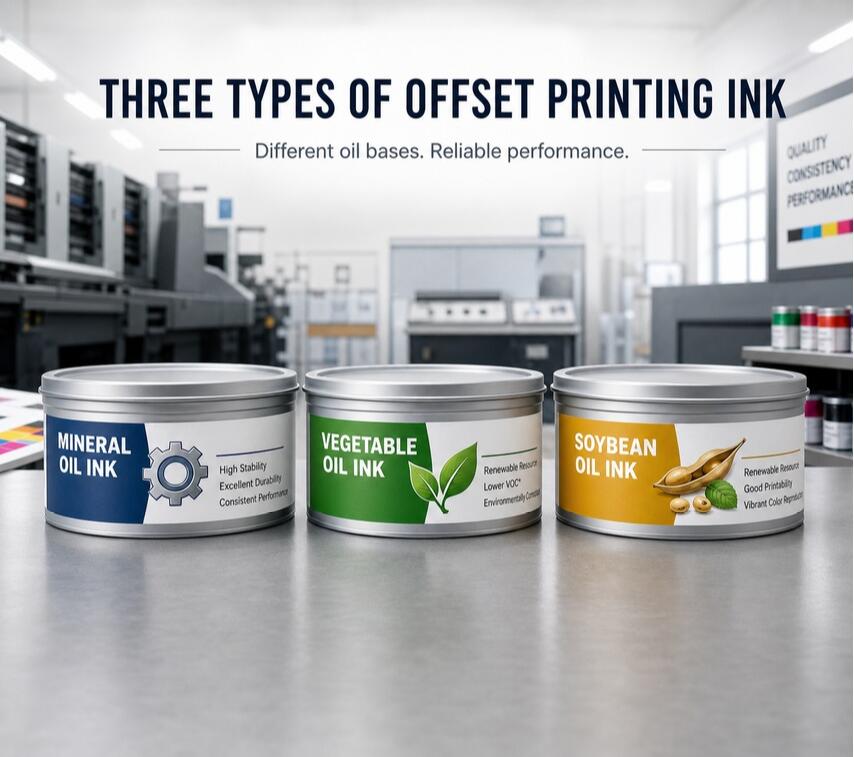
Offset printing inks are primarily composed of pigments, resins, and solvents, with the solvent base significantly influencing the ink's odor profile. Historically, mineral oil-based inks were prevalent. These inks are known for their robust performance but can emit a distinct, often stronger, chemical odor due to the volatile organic compounds (VOCs) present in mineral oils. This traditional scent is what many associate with freshly printed materials.
In response to environmental concerns and demand for milder odors, the industry has increasingly adopted vegetable oil-based inks, including soybean oil inks. These inks are formulated with renewable resources and generally have lower VOC emissions, resulting in a less pungent and often more neutral smell . While they are considered more environmentally friendly and typically produce a milder odor, it is important to note that even vegetable oils can cross-link and produce VOCs during the drying process, contributing to the overall scent . The specific type of vegetable oil (e.g., soybean, linseed) can also subtly alter the ink's inherent aroma.
2.Beyond Ink: Other Contributors to Print Odor
Attributing all print odor solely to ink can be misleading, as several other factors in the printing process can contribute significantly to the final smell of a printed product:
•Paper: The paper itself can be a major source of odor. Different paper stocks, especially those with coatings, recycled content, or specific pulp treatments, can have their own inherent smells that become more noticeable after printing and drying.
•Fountain Solution: This critical component, a mixture of water, alcohol (or alcohol substitutes), and various additives, plays a vital role in the offset process. The chemicals within the fountain solution, as well as its pH and conductivity, can interact with the ink and paper, potentially generating or amplifying odors . Issues like an overly acidic or warm fountain solution can destabilize ink and contribute to undesirable smells .
•Drying and Curing: The drying or curing process of the ink is crucial. If inks, particularly UV inks, are not properly cured, residual uncured components can emit strong, unpleasant odors . Adequate ventilation and proper drying conditions are essential to minimize this.
•Adhesives and Coatings: Any additional adhesives used in binding or finishing, or protective coatings applied to the printed surface, can also introduce their own distinct odors.
3.Conclusion
It is essential for clients to understand that some level of odor is inherent in printed materials due given the chemical nature of the printing process. The type of ink used—mineral oil, vegetable oil, or soybean oil—will certainly influence this. However, a strong or unusual odor is not always solely an ink issue. A comprehensive analysis should consider the paper, fountain solution, drying conditions, and other post-press treatments. Open communication between clients and printers about odor expectations and potential sources can help ensure satisfaction with the final printed product.
Read More






 IPv6 network supported
 English
 zh
zh Русский
 عربي
عربي Español
 Français