

-
Email Ustrade@daiheiink.com
-
Contact Number+86 (591)-38260128(620)
-

Your Language :English
Email Ustrade@daiheiink.com
Contact Number+86 (591)-38260128(620)
Your Language :English
🌍 Environmental Regulations Driving Transformation
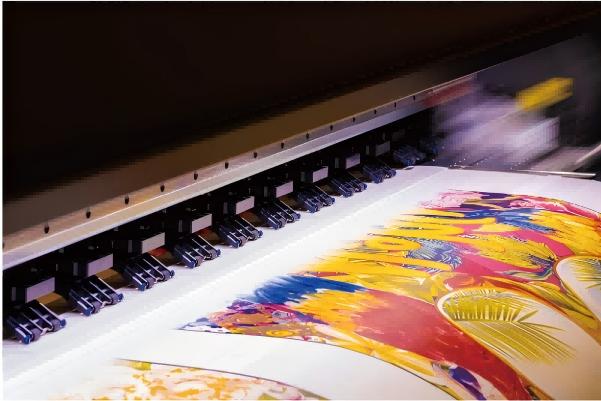
Global environmental regulations are tightening, with traditional inks emitting millions of tons of VOCs annually. China’s packaging and printing industry contributes 30% of global VOC emissions. LED UV inks, featuring solvent-free formulations and UV-curing technology, achieve "zero VOC emissions", aligning with China’s 14th Five-Year Plan for VOC control and policies like the EU Carbon Border Tax. This positions LED UV as the core solution for green printing upgrades.
⚡ Technical and Economic Advantages
Energy Efficiency: LED light sources consume only 20-25% of traditional mercury lamps’ energy, with a lifespan exceeding 20,000 hours (10× longer than mercury lamps), reducing operational costs by 70%.
Application Breakthroughs: Low-temperature curing (≈60°C lamp surface) prevents deformation of heat-sensitive substrates like plastic films, enabling use in high-growth fields such as food packaging, electronics (e.g., PCBs), and 3D printing.
📈 Market Growth and Innovation
The global LED ink market exceeded 1 billion** in 2024, with China accounting for **35%**. Packaging printing dominates demand (>**60%**), especially for food/pharmaceutical packaging due to non-toxic safety. By 2028, the global UV LED curing market is projected to surpass **12 billion (CAGR >10%).
Key innovations addressing high initial costs and curing limitations on dark substrates include:
Material R&D: Bio-based photoinitiators to resolve toxicity concerns.
Hybrid Solutions: Combining LED UV with water-based inks to balance eco-friendliness and adaptability.
Smart Integration: IoT-enhanced curing precision and production efficiency.
💎 Conclusion: An Irreversible Green Shift
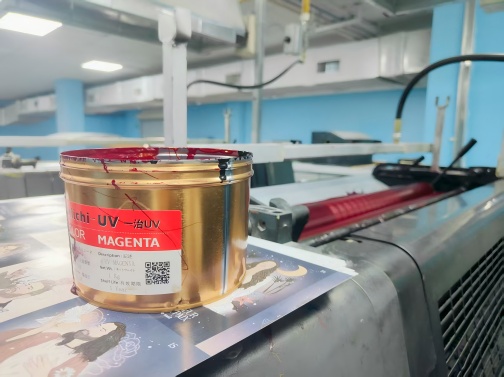
Policy pressure, technological benefits, and market demand are propelling LED UV ink to the forefront of printing. As bio-based materials proliferate, equipment costs decline, and global carbon taxes take effect, this transformation is no longer a question of "if" but "how fast" — finally balancing ecology and economics.

No. 2, Yangyu Road, Phase I, Minhou Tieling Industrial Zone, Fuzhou City, Fujian Province (Postal Code: 350100)


 IPv6 network supported
 English
 zh
 Русский
 عربي
 Español
 Français